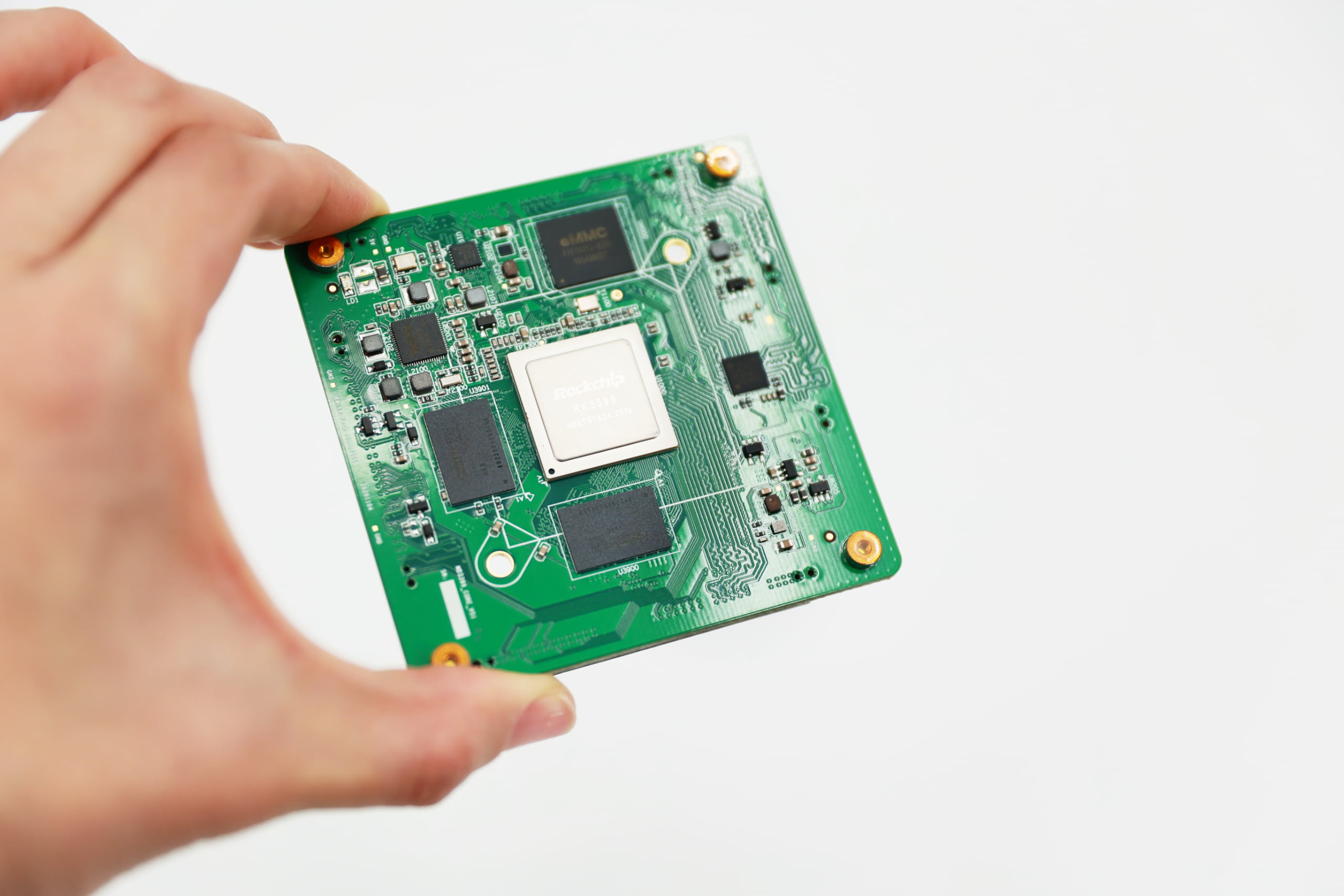
A custom single board computer lets you control your devices better in hard places. You can choose the parts and features you want. This means your device works better, uses less power, and fits your project well. Many companies now pick custom solutions for their embedded systems. They want hardware that fits their needs exactly.
LMTEK’s industrial-grade embedded single board computer is a great choice for industrial automation, smart devices, and IoT gateway solutions.
Here’s a quick look at why more businesses are choosing custom single board computers:
| Attribute | Details |
|---|---|
| Market Size (2024) | USD 1.03 billion |
| Market Size (2034) | USD 2.31 billion |
| CAGR (2024-2034) | 8.4% |
| Enterprise SBC Revenue Share | 50% by 2034 |
Custom single board computers help you make products that are reliable, work well, and last a long time.
Key Takeaways
-
Custom single board computers let you pick the parts you want. This makes your device faster and smaller. It also uses less power.
-
You can make custom SBCs for hard places and special jobs. This makes them work better and saves money. You do not have to use extra parts you do not need.
-
Choosing the best processor, memory, and ports helps your device work well. It can do things like AI, medical imaging, or industrial control.
-
Custom SBCs keep your ideas safe with strong security. They also have legal rules to stop copying or hacking.
-
Working with skilled design partners helps your custom SBC meet good standards. It also supports your needs for a long time. This helps you sell your products faster.
Custom Single Board Computer: Strategic Advantages Over Off-the-Shelf Options
Addressing the limitations of standard SBCs in specialized applications.
Standard single board computers have set features. Sometimes, you get ports you do not need. Other times, you miss the right interface for your project. This can waste space and power. It can also make your device hard to fit in small places.
Custom single board computers fix these issues. You pick only the features you want. You can add special I/O for your sensors. You can take out parts you do not use to save money. This helps you make small SBCs that work better for your needs.
Here are some ways custom SBCs help you beat off-the-shelf hardware:
-
You pick the processor that fits your job. This gives you better speed and uses less power.
-
You choose memory and storage that match your data.
-
You can add support for industrial protocols, like UART or RS485, for your B2B projects.
-
You can design for tough places, making a real industrial single board computer.
Custom SBCs also let you use secure systems and hardware security features. This is important for medical devices, transportation, and other high-reliability systems.
Achieving a perfect fit for unique requirements and competitive differentiation.
Customization gives you more choices. You can make a board that fits your case or system just right. This helps you stand out from others. You can build special computing solutions that meet your needs and give you an edge.
With custom embedded solutions, you can:
-
Lower your total cost by removing extra features and using less power.
-
Use modular design for easy upgrades and repairs.
-
Get your product to market faster by working with experts who know your field.
-
Meet rules and certifications for your area, like medical or industrial automation.
Custom SBCs also make it easy to set up your system. You can use profile-based setup and REST-API automation. This makes your system easy to grow and ready for new changes.
Customization helps you save money, work better, and keep your technology ready for the future. You get a solution that fits your project, not the other way around.
Custom Single Board Computer: Making Performance Fit Your Work
Processor Selection: Picking the right CPU, GPU, and accelerators for your needs.
You can choose the processor that fits your work best. This is called processor selection. Picking the right CPU, GPU, or special accelerator makes your system faster. You can focus on high performance for things like AI, pictures, or real-time control.
For example, in medical imaging, some companies use GPU cards. These help doctors see clearer pictures from ultrasound or MRI machines. This gives faster and more correct results. In smart transportation, edge AI devices use special accelerators. They read license plates quickly. This helps control traffic right away. These examples show how the right processor setup makes things work better and faster.
Making power use, speed, and special instructions work for you.
You can also set up your SBC to use less power or go faster. If you need your device to run all day and stay cool, pick a low-power CPU. If you want fast data work, choose a high performance processor. Some processors have special instructions. These help with things like machine learning or video decoding. This kind of setup gives you more choices and real-time speed.
Memory Configuration: Picking RAM and storage for the best data use.
Memory configuration means you decide how much RAM and storage you need. You can pick DDR4 or LPDDR5 memory. Each type has its own good points. DDR4 is common and works well. LPDDR5 uses less power and is good for portable devices. You can also pick the right storage size for your data.
Picking the right memory type (DDR4, LPDDR5) and size.
If your project uses lots of data, like video or sensor streams, you need more RAM. For simple jobs, you can use less. This saves money and space. Picking the right memory makes your system work better and keeps it running smoothly.
Custom I/O: Adding just the ports you need for your sensors, actuators, and other parts.
Custom I/O lets you add only the ports you need. You can connect sensors, cameras, or special machines. You do not have extra parts that take up space or cost more. This is important for projects where space matters.
Taking out extra parts to save money and space.
By removing ports you do not use, your board gets smaller and cheaper. You also make it work better because there is less to handle. Many x86 single board computer designs have lots of I/O options. But with custom boards, you get only what you need. This means your project works better and faster. You also get more ways to connect your devices and can change things later if needed. Custom SBCs with strong processors and many I/O options help you build high performance embedded solutions.
Custom Single Board Computer: Making Devices More Reliable for Important Jobs
Component Selection: Choosing industrial-grade components for extended temperature ranges and harsh environments.
If you build a custom single board computer for factories or hospitals, you want it to last a long time. You need strong parts that can handle heat, cold, dust, and water. These parts help your device work where normal computers might stop working. Using industrial-grade components makes your system more reliable. Your device can run longer without breaking.
You also make the Mean Time Between Failures (MTBF) higher. MTBF shows how long your device works before it needs fixing. By picking strong parts, you have less downtime and your work keeps going. This is very important for embedded systems B2B, where every minute matters.
Increasing MTBF (Mean Time Between Failures) and reducing downtime.
-
Use strong parts so your device lasts longer.
-
Pick parts that work in hot and cold places.
-
Choose suppliers who are known for good quality.
Tip: Always look at datasheets for temperature and humidity before picking your parts.
Ruggedization: Implementing conformal coating, vibration dampening, and other protective measures.
You can make your SBC even stronger by adding special features. Conformal coating keeps out water and dust. Vibration dampening protects parts when machines shake or move. These steps help your device work in tough places like factories or outside.
Ensuring reliable operation in demanding conditions (e.g., extreme temperatures, humidity, shock).
-
Add special features to protect your board.
-
Test your board in real-life places.
-
Use a rugged single board computer for jobs that need high reliability.
Note: Ruggedization is needed for transportation and industrial automation SBCs.
Lifecycle Management: Securing long-term availability and support for critical components.
You want your product to work for many years. Lifecycle management means you plan ahead. You pick parts that will be sold for a long time. This helps you avoid making new designs and keeps your system steady.
Minimizing redesign efforts and ensuring consistent performance over time.
-
Work with suppliers who sell long-lasting components SBC.
-
Plan for updates and support.
-
Keep your system running with trusted parts.
Good lifecycle management saves time and money. It also keeps your product working well and reliable for many years.
Intellectual Property Protection for Custom Single Board Computers
Proprietary Design: Protecting your unique hardware and software IP.
When you make a custom single board computer, you want to keep your ideas safe. Proprietary design means you own how your hardware and software work together. This helps you stand out in embedded systems B2B. It gives you a real edge in technology.
Recent data from 2024-2025 shows patents are more important now. If you write your patent well, you can stop others from copying your inventions. Patents give you special rights. Only you can use or sell your design. This makes investors trust your business more. It also helps you protect your market. For example, Samsung uses hardware patents to make their devices special. This keeps their customers loyal. These patents cover things like touch controls and easy data sharing.
You can also use copyrights, trade secrets, and trademarks to protect your software. Each type of protection covers a different part of your design. If you have a legal problem, a source code review can help prove your software is original. Working with experts makes your case stronger.
Here’s a real case that shows how legal agreements protect custom SBCs:
| Aspect | Details |
|---|---|
| Case Name | Comptek Tech., LLC v Boldyn Networks Infrastructure US LLC |
| IP Subject | Custom small cell infrastructure (Link5G Program) |
| Protection Mechanism | Clear contracts and defined roles for design, development, and manufacturing |
| Outcome | Effective legal protection of custom SBC IP |
| Source | Case Details |
Preventing reverse engineering and unauthorized copying of your technology.
You can make it hard for others to copy your work. Use strong contracts and keep your design details private. Use patents to protect your ideas. These steps help stop reverse engineering and keep your technology safe.
Tip: Always write down your design steps and keep records. This helps if you need to prove you own your work.
Custom BIOS/Firmware: Implementing security features to prevent unauthorized access and modification.
Custom BIOS and firmware add more protection to your industrial single board computer. You can use cryptographic tools like RSA digital signatures and AES encryption. These tools check that only your approved software runs on your device. This keeps hackers out and protects your important data.
In one car project, engineers used a secure bootloader with RSA and AES. This stopped anyone from running fake software on the car’s computer. Every time the system started, it checked the software for changes. If something was wrong, the system would not run. This made the car safer and kept the data safe.
Securing your boot process and protecting sensitive data.
You can test your firmware to make sure it works fast and stays safe. Security scans look for weak spots. Upgrade tests make sure new software does not break your system. These steps help keep your embedded system integration strong and reliable.
Note: Custom BIOS and firmware are important for secure embedded systems and hardware-level security SBC.
Custom Single Board Computer: Size and Weight Optimization
Form Factor Optimization: Designing a board that perfectly fits your enclosure or system.
When you make a custom single board computer, you pick the shape and size. This is called form factor optimization. You can design your board to fit inside any device or case you need. This is very important for portable devices and medical device SBCs. It also matters for smart retail solutions where space is tight.
Minimizing size and weight, crucial for portable and embedded devices.
You want your device to be light and easy to hold. It should fit well if someone wears it or uses it for a long time. Designers use special ideas to shape boards that match the body or the space inside a product. For example:
-
Wearable devices use curved boards to fit the body. This makes them less bulky and more comfy.
-
Smaller boards use less material, so they cost less.
-
You save space, so your device can have a bigger battery or more features.
A study of a wearable EEG headset showed that testing different shapes helped. By moving parts around, designers made the headset lighter and more comfy. This kind of custom form factor SBC design helps you balance comfort, use, and battery life. You also get an edge in technology by making something that fits just right.
Component Placement: Strategic placement of components for optimal space utilization.
You can put each part of your SBC where it works best. This is called strategic component placement. It helps you use all the space inside your device.
Improving airflow and heat dissipation in compact designs.
Good placement does more than save space. It also helps your device stay cool. If you keep hot parts apart, you get better airflow. This keeps your high-performance SBCs running longer and safer.
Designers use special tools to test how air moves inside a device. For example, the Aero Rake Design project used real-time data to make airflow and cooling better in a racecar. In another case, engineers used 3D thermal tests to arrange parts in a cube-shaped power converter. They found the best spots for each part. This stopped hot spots and made cooling better.
You can use these same ideas in your custom embedded solutions. By planning your layout, you get a small SBC that runs cooler, lasts longer, and works better for industrial automation SBC, edge computing hardware, or IoT gateway solutions.
Tip: Always test your design with airflow and heat tools before you build. This helps you avoid problems and get the most from your hardware customization B2B project.
Cost Optimization Strategies for Custom Single Board Computers
Eliminating Unnecessary Features: Removing unused ports, controllers, and other components.
When you make a custom single board computer, you pick what goes on it. You can skip extra ports, controllers, or chips you do not need. This helps you spend less money on your project. Every part you leave out saves you money on materials. This is called lowering the Bill of Materials, or BOM. A smaller BOM makes your board lighter and easier to fit in small SBC solutions.
You also make your board work better. It uses less power and stays cooler. You do not waste energy on parts you never use. This matters for low power SBCs and industrial automation SBC projects. Your board does just what you want and nothing extra.
Tip: Always check your design with your team. Ask, “Do we need this part?” This question can help you save a lot of money.
Reducing BOM (Bill of Materials) cost and improving efficiency.
-
Take out ports and controllers you do not use.
-
Use only the memory and storage you need.
-
Pick I/O that fits your sensors and devices.
-
Focus on hardware customization B2B for your project.
Optimized Manufacturing: Streamlining the manufacturing process for cost-effective production.
You can make your board cheaper by building it in a smart way. Optimized manufacturing means you plan each step to save time and money. You work with partners who know how to make custom electronics. They help you use supply chain optimization electronics to get parts faster and for less money.
You also use design for manufacturability (DFM). This means your board is easy to build in big numbers. You avoid shapes or parts that are hard to find. This keeps your production line moving and your cost low. You get cost-effective solutions that help you do well in the embedded systems B2B market.
Leveraging efficient supply chains and manufacturing techniques.
-
Pick suppliers with good records.
-
Use modular embedded design for easy upgrades.
-
Plan for mass production custom hardware from the start.
-
Test your board early to find problems before they cost more.
Long-Term Cost Savings: Reducing maintenance costs, extending product lifecycles, and protecting IP.
Thinking ahead saves you money too. If you use long-lifecycle components SBC, your board lasts longer. You do not have to redesign your product every year. This lowers your total cost of ownership embedded.
You also spend less on repairs. A reliable board means fewer fixes and less downtime. In automation, this keeps your machines working and your business running. Protecting your intellectual property (IP) stops others from copying your design. This keeps your investment safe and your cost under control.
Note: Smart choices now can save you a lot later. Always look for ways to work better and spend less over time.
Custom Single Board Computer Applications Across B2B Industries

Medical Devices: Custom SBCs for portable ultrasound machines, patient monitoring systems, and surgical robots.
Custom single board computers are important in medical devices. You can find them in portable ultrasound machines and patient monitors. They are also used in surgical robots. These devices need to work fast and give correct results. Medical device SBCs must follow strict rules to keep patients safe, like FDA compliance.
Companies use custom embedded solutions to add smart features. Some devices use AI-assisted diagnostics to help doctors. For example, Advantech’s USM-500 custom SBC is used in smart operating rooms. It has strong GPUs and special power supplies for medical use. This helps doctors see clear images quickly. CleverDev Software makes safe platforms for remote patient monitoring. Their work shows custom SBCs help hospitals work better and earn more money.
Meeting stringent regulatory requirements (e.g., FDA compliance).
Healthcare has tough rules you must follow. Custom SBCs help you meet these standards. You can add secure embedded systems and hardware-level security SBC features. You can also test your devices in real places to make sure they work well.
Industrial Automation: Custom SBCs for machine vision systems, robotics controllers, and process automation equipment.
Custom SBCs are used a lot in industrial automation. They power machine vision systems and robotics controllers. They also run process automation equipment. These jobs need strong and fast performance to keep factories working well.
-
Custom SBCs are used in EV charging stations and drive-thru kiosks.
-
They are also in warehouse robots.
-
They have flexible I/O for easy use with industrial protocols.
-
Modular embedded design lets you upgrade or change your system quickly.
The industrial automation market is getting bigger. It was about 1.5 billion USD in 2023. It could reach 2.73 billion USD by 2032. More automation happens because SBCs help factories work better and stop less. They also support edge computing hardware, so data is processed close to where it is made.
Providing robust performance in harsh industrial environments.
Factories can be hard places for computers. You need rugged single board computer designs for dust, heat, and shaking. Custom SBCs give you reliable performance even when things get rough.
Transportation: Custom SBCs for autonomous vehicles, fleet management systems, and railway signaling.
Transportation systems use custom SBCs for many jobs. You find them in autonomous vehicles and fleet management. They are also used in railway signaling. These systems need to work with many sensors and be strong.
Custom SBCs help track vehicles and manage routes. They help keep passengers safe. They support wireless connections and process data in real time. You can trust them to work in hot, cold, or fast-changing places.
Providing reliable operation in challenging environmental conditions.
You want your transportation systems to work every time. Custom SBCs use strong parts and special cooling solutions. This keeps your systems running, no matter the weather or road.
Tip: You can use custom SBC technology for smart home or home automation too. These boards give you compatibility, performance, and automation for smart homes. You can control lights, security, and appliances easily. Smart home applications get the same strong performance and flexibility as medical and industrial fields.
The Design Process of Custom Single Board Computers
Requirements Gathering: Defining the specific needs and goals of the project.
Every embedded computing project begins with a clear plan. You must ask, "What should my device do?" Make a list of all the features you want. Think about where your device will be used. Will it need to handle heat, dust, or water? Decide what kind of power supply is needed. This step helps you avoid problems later.
System Architecture Design: Selecting the optimal components and interfaces.
Now, you choose the main parts for your project. Pick the processor, memory, and storage that fit your needs. Decide which ports and connections are needed. You might want USB, HDMI, or special industrial ports. Good system architecture helps your device work well and makes upgrades easier.
Tip: Always plan for growth. If your project gets bigger, your design should handle more work without starting over.
Hardware Design: Creating the schematic and PCB layout.
In this step, you draw a diagram of the circuit. This shows how each part connects to others. Next, you design the printed circuit board (PCB). Place each part in the best spot for cooling and saving space. Good hardware design keeps your device small and helps it last longer.
Software Development: Developing the BIOS, firmware, and application software.
You need software to make your hardware work. Start with the BIOS, which helps your board turn on. Then, write the firmware. Firmware is special software that talks to the hardware. Last, build the application software. This is what users see and use. Test your software often to find and fix bugs early.
-
BIOS: Turns on the board
-
Firmware: Connects hardware and software
-
Application: Runs the main jobs
Prototyping and Testing: Validating the design and functionality of the custom SBC.
Build a prototype of your project. Test every feature to make sure it works. Check that the hardware and software work together. Try your device in real-life situations. Fix any problems you find. This step helps you catch issues before making many devices.
Manufacturing and Production: Scaling up production to meet demand.
Once your design works, you start making more devices. Using System-on-Modules (SoMs) can make this step faster. SoMs help you finish your project 9 to 12 months sooner than full custom designs. You get faster testing and fewer hardware problems. This means you can sell your product sooner and with less risk.
Note: Fast and smart production helps you meet customer needs and stay ahead in the market.
.Selecting a Design Partner for Custom Single Board Computers
Picking the right design partner is very important. The team you choose should know what you need. They must give you results you can trust. Here are some things to look for:
Experience and Expertise: Proven track record in designing and manufacturing custom SBCs.
You want a partner who has done this work before. They should have experience with GPU-accelerated solutions like Nvidia Jetson and CUDA. This helps with real-time analytics. They should know how to make Custom Board Support Packages (BSP) for tough standards like DO-178B/C. This is needed for defense projects. They should have worked on things like multi-axial gimbal systems and high-speed data cards. They should also know about GPS anti-jamming devices. It is good if they have done advanced algorithm work, like AI and machine learning. Working with big names like FLIR for defense optics is a plus. Meeting strict rules for defense and industrial single board computer projects is important. These things show your partner can handle hard embedded systems B2B jobs.
Engineering Capabilities: Strong hardware, software, and mechanical engineering skills.
A good partner has many skills. You need people who know hardware design for both high-performance SBCs and low power SBCs. You also need software experts who can make custom drivers and firmware. Mechanical engineers help make custom enclosures and cooling. This mix of skills gives you the best computing solutions for your project.
Manufacturing Capabilities: Ability to handle low-volume and high-volume production runs.
Your partner should be able to make a few boards or many. You can start with a prototype and then make more when you are ready. Look for flexible manufacturing lines. They should have experience with both small SBC solutions and big embedded board projects.
Quality Assurance: Robust quality control processes to ensure reliability.
Reliability is very important in embedded system integration. Your partner should test every board to make sure it works well and is safe. They should use good parts and follow strict checks. This keeps your custom electronics safe and working right.
Communication and Collaboration: Clear communication and close collaboration throughout the design process.
You need a partner who listens and answers fast. Good teamwork makes clients happy. Here is what clients say:
| Metric / Feedback Type | Evidence |
|---|---|
| Net Promoter Score (NPS) | Score of 95, much higher than the industry average of 50. |
| Client Testimonials | Clients praise responsiveness, collaboration, and clear communication. |
This shows that good communication brings better results and happy clients.
Long-Term Support: Commitment to providing long-term support and maintenance.
Pick a partner who helps you even after the project is done. They should offer updates, repairs, and help with changes later. This long-term support keeps your system working and protects your money.
Tip: Always ask about support and maintenance before you pick a partner. Good support means fewer problems in the future.
A custom single board computer lets you make what you want. You get better speed, more choices, and stronger devices for your project. LMTEK’s boards work well in hard places like factories and hospitals.
If you want a device that fits your needs and lasts, custom single board computers are a good pick.
Here is a quick look at where the market is going:
| Aspect | Details |
|---|---|
| Market Size (2033 projected) | USD 803.5 million |
| CAGR (2025-2033) | 11.1% |
| Fastest Growing Sector | Aerospace, AI, and industrial automation |
-
You will see more AI, better safety, and smaller, faster boards soon.
-
Cloud-based and remote-ready designs will help you grow fast.
FAQ
What is a custom single board computer (SBC)?
A custom SBC is a small computer you design for your own project. You pick the parts, size, and features. This helps you get the best fit for things like industrial automation, medical devices, or smart retail solutions.
How does hardware customization B2B help my business?
You get a board that matches your needs. You can add special ports, use low power SBCs, or make rugged single board computers for tough places. This saves money and helps your product stand out in the embedded systems B2B market.
Why should I care about reduced BOM costs in SBC design?
BOM means Bill of Materials. If you remove parts you do not need, you pay less. This makes your embedded board development cheaper and your device lighter. Lower BOM costs also mean faster time to market hardware.
Can I use custom SBCs for AI or edge computing hardware?
Yes! You can pick high-performance SBCs with special chips for AI or machine learning embedded tasks. These boards process data fast, right where you need it. This is great for edge AI platforms, machine vision embedded, and predictive maintenance hardware